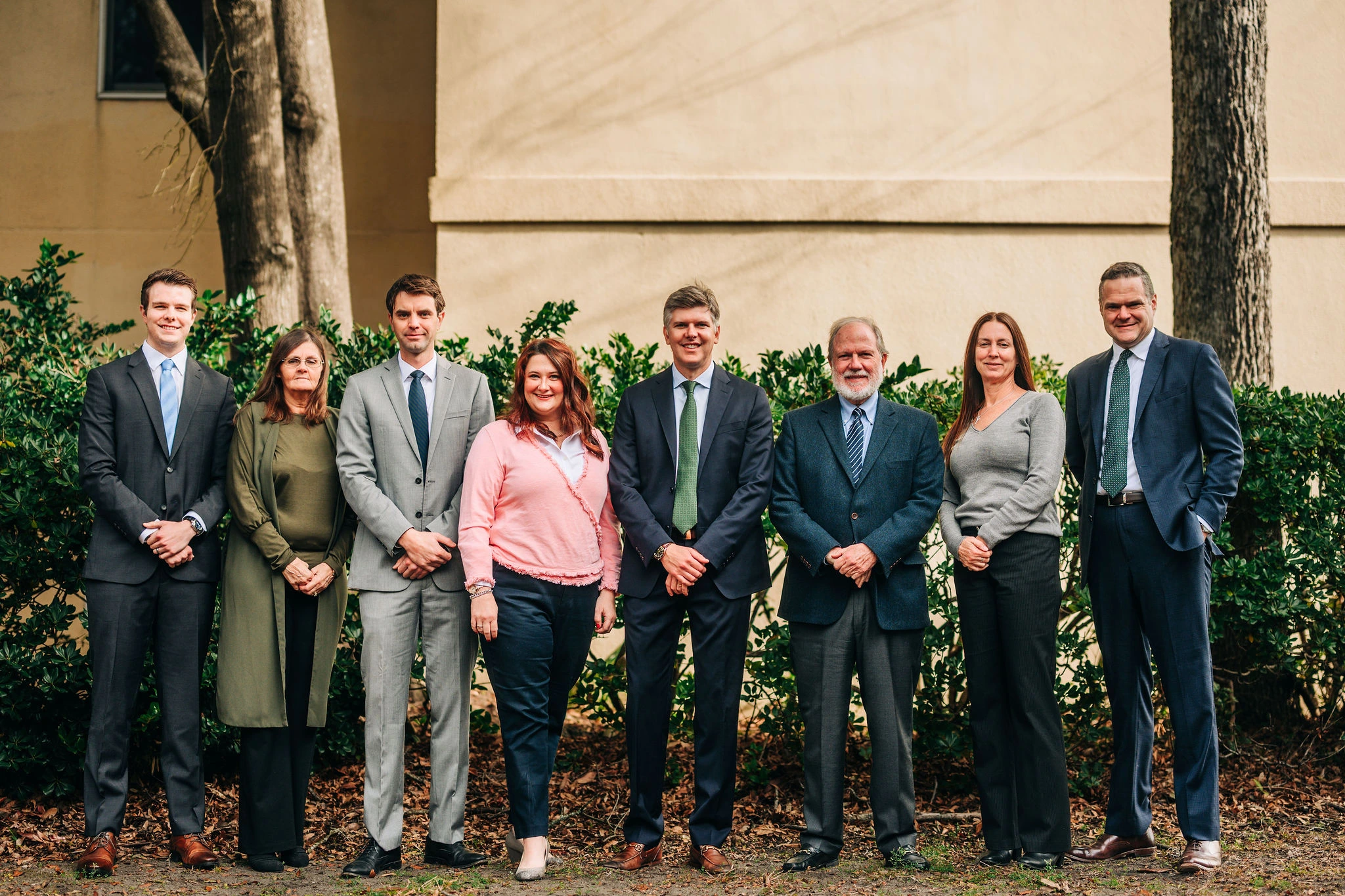
When someone in power harms your family, whether it happens on a Charleston street or inside a jail cell, the feelings of powerlessness can be crushing. Maybe you’ve already been told there’s nothing you can do. Evans Moore, LLC takes on clients who have had the door slammed in their face. We’re a civil rights and injury firm that is small by design, which means our attorneys stay directly involved in every case and represent clients through trial. If your family has been affected by police or jail misconduct in Charleston, call (843) 995-5000 for a free consultation. You pay nothing unless we recover compensation on your behalf.
Why Choose Evans Moore, LLC for a Civil Rights Case in Charleston?
Civil rights cases against police departments and detention facilities are among the hardest a family can bring, and they require a firm willing to do the work. Evans Moore, LLC is small by design. We keep our caseload focused so our attorneys stay active in each case, are present at trial, and remain directly involved at every stage, instead of handing your case off to staff.
Our track record reflects that commitment. We’ve recovered over $200M in verdicts and settlements, earned Top 10 jury verdicts in South Carolina and obtained a $10M jury verdict in a case involving jail medical neglect. Past results do not guarantee future outcomes, and every case is different and depends on its unique facts. As South Carolina natives, we take these cases personally, and we’re prepared to hold those in power accountable.
If you’re weighing your options, call (843) 995-5000 to talk through what happened. The consultation is free.
What Types of Police and Jail Misconduct Cases Do We Handle?
Evans Moore, LLC handles civil rights cases arising from the conduct of law enforcement officers and jail or prison officials. These are fact-intensive cases, and whether a claim exists depends on the specific circumstances. The situations we see most often include:
– Police misconduct and excessive force, including unjustified or unreasonable force during stops, arrests, or detention
– Deaths in custody, including deaths tied to medical neglect, suicide, violence, or dangerous conditions inside a jail
– Inmate medical neglect, where a serious medical or mental health need goes ignored or untreated
– Sexual abuse in custody by officers, guards, or others acting under government authority
– Unconstitutional conditions of confinement, including a failure to protect a detainee from a known and serious risk of harm
If your situation isn’t listed here, it’s still worth a conversation. Contact us at (843) 995-5000, and we’ll tell you honestly whether we can help.
What Laws Protect Individuals Harmed by Police or Jail Misconduct?
Most civil rights claims of this kind are built on federal law. 42 U.S.C. § 1983 allows a person to sue state and local government officials for violating their civil rights. It applies when someone acts under color of law, meaning they use authority granted by a government entity and, in doing so, deprive a person of rights protected by the Constitution.
The Eighth and Fourteenth Amendments
Which constitutional protection applies often depends on the person’s status. The Eighth Amendment protects individuals convicted of a crime from cruel and unusual punishment. Courts have long held that deliberate indifference by prison personnel to a prisoner’s serious illness or injury constitutes cruel and unusual punishment under that amendment. For individuals held before trial, claims are generally analyzed under the Fourteenth Amendment, which protects pretrial detainees.
The deliberate indifference standard
Many jail and prison cases turn on what’s known as deliberate indifference. In plain terms, this means officials knew about a serious risk and disregarded it by failing to take reasonable steps. Under the standard the courts apply, an official must be aware of facts from which the inference could be drawn that a substantial risk of serious harm exists, and must also draw that inference. It’s a demanding test, which is one reason these cases require careful investigation and a firm that understands how to build them.
How Long Do You Have to File, and What Limits Apply?
Deadlines in these cases can be short, and they depend on who you’re holding responsible. Federal civil rights claims do not have their own deadline. Instead, Section 1983 claims borrow the state’s statute of limitations for personal injury claims. In South Carolina, that period is three years for an injury to the person or to the rights of another under S.C. Code § 15-3-530.
When a claim is brought against a government entity under state law, the South Carolina Tort Claims Act may apply, and it can change the math. Under S.C. Code § 15-78-110, an action is generally barred unless it’s commenced within two years, though that can extend to three years if the claimant first files a verified claim. The Act also limits recovery. Under S.C. Code § 15-78-120, recovery is generally capped at $300,000 per person for a single occurrence and $600,000 in total, regardless of the number of agencies involved. Because these rules are strict and fact-dependent, it’s worth talking to an attorney early. Call (843) 995-5000 to find out which deadlines may apply to your family’s situation.
What Compensation May Be Available?
Depending on the facts, compensation in a civil rights case can include economic losses, such as medical bills, lost income, and funeral costs where a loved one died in custody. It may also include non-economic damages for pain, suffering, and emotional distress. In some cases involving extreme conduct, punitive damages may be available against individual wrongdoers. Damage caps may apply when the defendant is a government entity, which is another reason these cases are best evaluated individually.
Frequently Asked Questions About Civil Rights Claims in Charleston
How much does it cost to hire a civil rights lawyer?
Evans Moore, LLC handles these cases on a contingency fee basis, so there are no upfront costs to you. You pay nothing unless we recover compensation on your behalf. Your initial consultation is free, and there’s no obligation.
How do I know if my family has a civil rights case?
You may not know for certain, and that’s normal. These cases depend heavily on the facts and often on records a family cannot easily access on their own. The best step is to call us and describe what happened so we can tell you honestly whether we can help.
How long do I have to file a civil rights claim in South Carolina?
It depends on the type of claim and who’s responsible. Federal Section 1983 claims generally follow South Carolina’s three-year personal injury deadline, while claims against government entities under the SC Tort Claims Act may have a shorter, two-year window. Because evidence can disappear and deadlines are unforgiving, it’s best to reach out as soon as you can.
Do you handle civil rights cases in Charleston?
Yes. Our Charleston office is located at 635 East Bay Street, Suite F, Charleston, SC, 29403, and we serve families throughout the Lowcountry. These cases can involve city police, county deputies, and local detention facilities, and we’re prepared to take them on.
Will my case go to trial?
Not necessarily. Many cases resolve through settlement, but some require trial, and that’s where being small by design matters. Our attorneys are present at trial and prepared to try your case if that’s what it takes to hold those responsible accountable.
Talk With a Charleston Civil Rights Attorney
Cases involving police or jail misconduct are painful, and no family should have to face one alone. If your family has been affected by police or jail misconduct, contact Evans Moore, LLC at (843) 995-5000 to discuss available options. The consultation is free, and we’ll give you an honest, straightforward assessment of your situation.